
The Stern Lab
Research Group
Principal Investigator
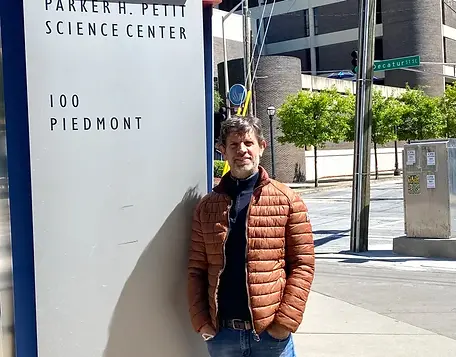
Dr. Javier Stern
Dr. Stern is a neuroscientist with special interests in central neuronal circuits involved in autonomic and neuroendocrine regulation. Dr. Stern obtained his M.D. and PH.D training at the University of Buenos Aires, Argentina, and then completed postdoctoral training in the laboratory of Dr. William E. Armstrong, at the University of Tennessee, Memphis. Before joining GSU, Dr. Stern was Assistant Professor at Wright State University (1999-2003), Associate Professor at the University of Cincinnati (2003-2008), and Professor at Augusta University (2008-2017). Dr. Stern received numerous national and international awards, including the award for Meritorious Research by a Young Investigator, The American Physiological Society (2001), the Young Investigator Award of the International Society of Hypertension Meeting (2006)
_JPG.jpg)
Research Assistant Professor
Dr. Ranjan Roy
Currently Dr. Ranjan is working as a Research Assistant Professor in The Neuroscience Institute, GSU. Ranjan completed his PhD from Otago University, New Zealand and Post-doc training from GSU. Ranjan's research interest focuses on elucidating neurobiological mechanisms that drive neurohumoral activation and contribute to morbidity and mortality in cardiovascular diseases (CVDs), including myocardial infarction, heart failure, and hypertension. Key techniques used in the lab includes in-vivo high resolution 2-phtoton microscopy, ex-vivo electrophysiology and other cellular and molecular approaches. Ranjan established a novel surgical approach to generate a window that exposes the ventral surface of the brain, including the supraoptic nucleus (SON) , in an anesthetized rat.
.jpg)
Lab Assistant
Paramita Juardar
Paramita completed her Master’s in the Neuroscience Institute at Georgia State University. Paramita completed her MBBS from Rangpur Medical Collage, Bangladesh. Paramita's research interest focuses on understanding i) how stress-sensitive hypothalamic and limbic circuits influence autonomic output and neuroendocrine regulation. ii) how salt induces cardiometabolic diseases and cognitive decline, iii) how hypothalamic neuropeptides contribute to energy metabolism, anxiety/depression, and other social behaviors. Paramita is getting the necessary training to investigate those scientific questions. In the near future, Paramita will learn other associated techniques such as ex-vivo electrophysiology, 2-photon microscopy, q-PCR, and immunohistochemistry, and implement those techniques during her future PhD study.

Graduate Student
Levi Shook
Levi first attended Crafton Hills College in Yucaipa, CA, earning associates degrees in chemistry and social science. Levi then transferred to University of California, Riverside, to complete their bachelors in neuroscience and work in the Korzus learning and memory lab. Before graduate school, Levi served as a substitute teacher for the Redlands Unified School District. Levi joined the Stern lab 2021 and completed their masters in neuroscience in 2024. Levi's project investigates how hypoxia affects signaling in the supraoptic nucleus of the hypothalamus (SON). Recent work from our lab demonstrated an inverse neurovascular coupling response (iNVC), in which periods of high activity in SON vasopressin (VP) neurons led to local vasoconstriction and hypoxia (Roy et al., 2021). Hypoxia then led to further increases in VP cell activity. The mechanisms by which hypoxia acts on SON VP cells are not yet understood. My work uses patch clamp electrophysiology and confocal imaging investigate these mechanisms.

Postdoctoral Research Associate
Dr. Kaitlin Carson
Dr. Carson earned her bachelor’s degree in Neuroscience from The Ohio State University. She received her Ph.D. in Neuroscience from Pennsylvania State University, where she trained as an autonomic neurophysiologist. As a Postdoc in the Stern lab, Kaitlin's current work involves the development of a novel in vivo model utilizing 2-photon microscopy to measure blood flow in the dorsal brainstem, including the nucleus of the solitary tract and area postrema. Kaitlin's primary projects include 1) characterization of blood flow asymmetry within the shared capillary network of the area postrema and nucleus of the solitary tract, 2) determining mechanisms of baroreflex-induced neurovascular coupling in the nucleus of the solitary tract, and 3) investigating how neurovascular coupling is impaired in heart failure, including the role of an overactive renin-angiotensin system.

Research Associate II
Elba Campos Lira
Elba is from Mexico City. She studied Biology at Universidad Nacional Autonoma de Mexico (UNAM). She has a master’s degree in Experimental Biology (Science Faculty) and a PhD in Neuroscience (School of Medicine) from Posgrado De Ciencias Biologicas (Postgraduate program in biological sciences) UNAM. Recently Elba is working on the effects of oxytocin (OT) and vasopressin (AVP) somatodendric release (SDR) from magnocellular neurons within the hypothalamic supraoptic nucleus (SON) and the paraventricular (PVN). The goal of the project is to elucidate whether SDR is capable of act in a volume-hormone like manner reaching structures like the central amygdala (CeA) as well as look at the physiological effects this phenomenon. She is exploring the role of vasopressin and its receptors in the regulation of social behavior and communication.

Graduate Student
Shaina McGrath
Shaina grew up in a rural town in Washington state and earned her bachelor's degree in health science from Corban University in Salem, OR. Shaina then earned a Master of Biomedical Science degree from Midwestern University in Downers Grove, IL. After graduation, Shaina worked as a laboratory technician at the University of Chicago for two years before joining the Neuroscience PhD program at GSU.
Shaina's project is looking at how microglia contribute to the unique neurovascular coupling characteristics in the supraoptic nucleus of the hypothalamus. Shaina hopes to elucidate how vasopressin signalling may impact microglial activity in this region, and how this relationship modulates the local vasal tone.

Undergraduate Student
Hanyu Kee
Hanyu Kee is a senior undergraduate who has been working as an intern within the Stern lab. He regularly helps maintain the lab and occasionally assists with experimental procedures on a part-time basis. Prior to working in the Stern lab, he was an intern working under Dr. Elliott Albers, where he acquired practical skills such as cryostat usage, CO2 euthanasia, brain tissue extraction, and cryopreservation, and since then has learned to use software such as Axon pCLAMP.
Hanyu aspires to perform research towards stress neurobiology, especially in the nervous system's influence in elevating the body's activity in stress response. He most often works with Dr. Kaitlin Carson when not helping to maintain the lab.

Product Manager
Team Member
This is your Team Member description. Use this space to write a brief description of this person’s role and responsibilities, or add a short bio.